PORTFOLIO FACE THE SHADOW
In the context of two solo exhibitions in 2023, a series of paintings emerged under the title LICHTUNGEN (Glades). The metaphor of LICHTUNGEN carries a strong symbolic resonance: when something is cleared away, space is created for something new. The process brings light into places that may previously have been dark. Metaphorically speaking, trees sometimes have to be uprooted to allow light to enter certain areas and make insight possible.
It is an attempt to find orientation amid the turbulent events of the world, particularly in relation to war and peace. This engagement encompasses not only external realities, but also what is referred to as shadow work.

In the painting DIE MISSGLÜCKTE ENTFÜHRUNG DER EUROPA (2023, acrylic and oil on canvas, 130 × 180 cm), I once again refer to Greek mythology. Instead of the abducted Europa, the daughter of Agenor, there is an empty space on the back of the mythical bull. The absence of the figure shifts the focus towards a fiery landscape of ruins at the centre of the painting.
The scene can be understood as a metaphor for the destruction of nature and for the loss of a cultivated relationship with matriarchal principles—principles that can contribute to a necessary balance within the individual in opposition to an objectifying conception of activity and self-perception governed by utility, function, and consumption.
As Blackstock states, shadow work is “not a matter of attaining a static state of perfection, but of engaging in a dynamic, ongoing process of differentiation and integration.” In C. G. Jung’s own words: “Until you make the unconscious conscious, it will determine your life, and you will call it fate.” Or, in other words: No war has ever brought peace.

In the painting ALICE AND THE SLEEPY MARCH HARE (2022, oil on canvas, 100 × 80 cm), what I described in my short article Manhattan Midtown Texture (2017) as “thirding”, “third space” or “one’s own space in between” takes on a visual form:
“In Manhattan Midtown, through the variety of glass façades, it is nearly impossible to perceive the texture of a single building when it is always accompanied by the reflected image of other buildings.”
ALICE encounters absurd figures and paradoxical riddles in a world behind the mirror on her path towards individuation. Like Alice, we move between rationalization and dreaming. A fragment of one world always remains present within the other, creating a third, overlapping state that opens up the possibility of new insights.
In ALICE AND THE SLEEPY MARCH HARE, my aim is to highlight the balancing force of imagination. Our world generates billions of images every day. These images circulate through the media and are mostly consumed superficially. This condition is symbolically represented by the sleeping March Hare and by Alice turning her face away.
Whether we like it or not, we encounter ourselves in every act of perception—through our own perspective on things. When the Mad March Hare sleeps, Alice cannot awaken either, despite all the rationality she applies.

In the context of DIE BEGEGNUNG IM PARK (ENCOUNTER IN THE PARK, 2022, oil on canvas, 120 × 220 cm), I would like to return once again to Joel Blackstock. In his article Carl Jung’s Shadow – Holding the Tension of Opposites in Depth Psychology, he offers an impressive summary of Jung’s model of opposites.
For C. G. Jung, individuation unfolds through the encounter with opposites, through which the Self gradually becomes conscious of itself. In his autobiographical work Memories, Dreams, Reflections, Jung describes this tension through the distinction between “Personality No. 1” and “Personality No. 2.”
“Personality No. 1 represented his outward, socially adapted self—the rational, academically engaged individual who functioned in the world of education, professional life, and social expectations. However, this aspect often felt shallow or incomplete to Jung. In contrast, Personality No. 2 was a deep, intuitive, and mystical aspect of Jung’s psyche. Connected to nature, timelessness, and a transpersonal dimension of existence, this part of Jung’s inner life had a profound sense of the sacred and an experience of the world as full of symbols and archetypal meaning. Unlike the structured world of Personality No. 1, Personality No. 2 was at home in solitude, dreams, and the unconscious. Over time, Jung moved from seeing this duality as his own private experience to understanding it as a universal psychological phenomenon. The tension between Personality No. 1 and Personality No. 2 mirrors the dynamic between the ego (the conscious, socially adapted self) and the Self (the deeper, transpersonal center of the psyche) in Jung’s later theories. As Tacey highlights, Jung believed that modern individuals suffer when they over-identify with Personality No. 1, cutting themselves off from the deeper wisdom of Personality No. 2. This is a core crisis of contemporary life: people live in a rational, empirical world but feel disconnected from deeper meaning.” by Joel Blackstock LICSW-S MSW PIP no. 4135C-S | Feb 19, 2025
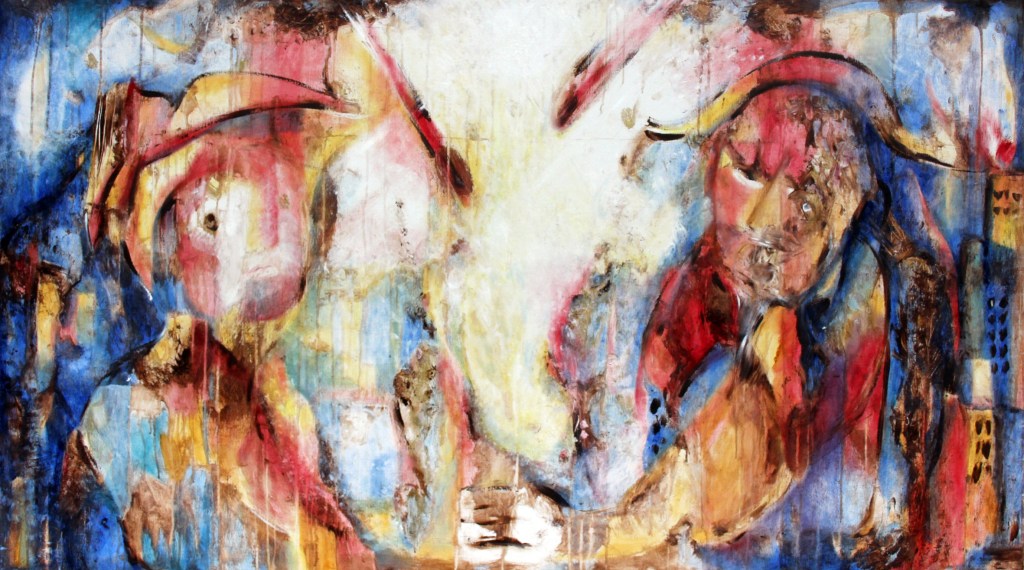
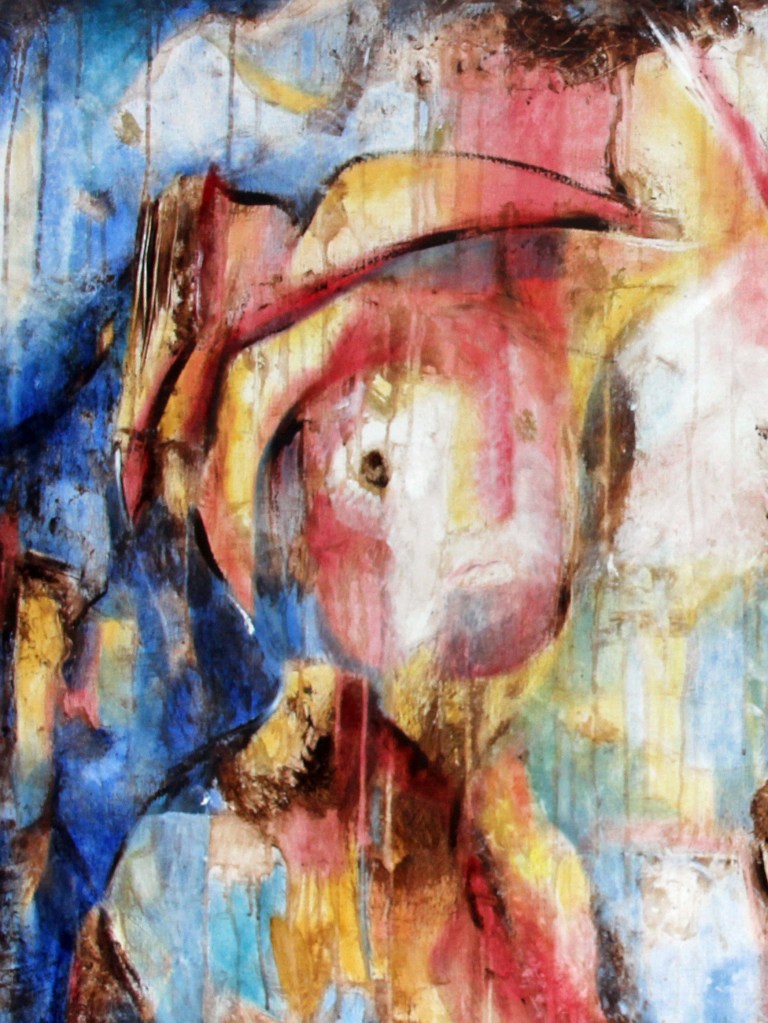
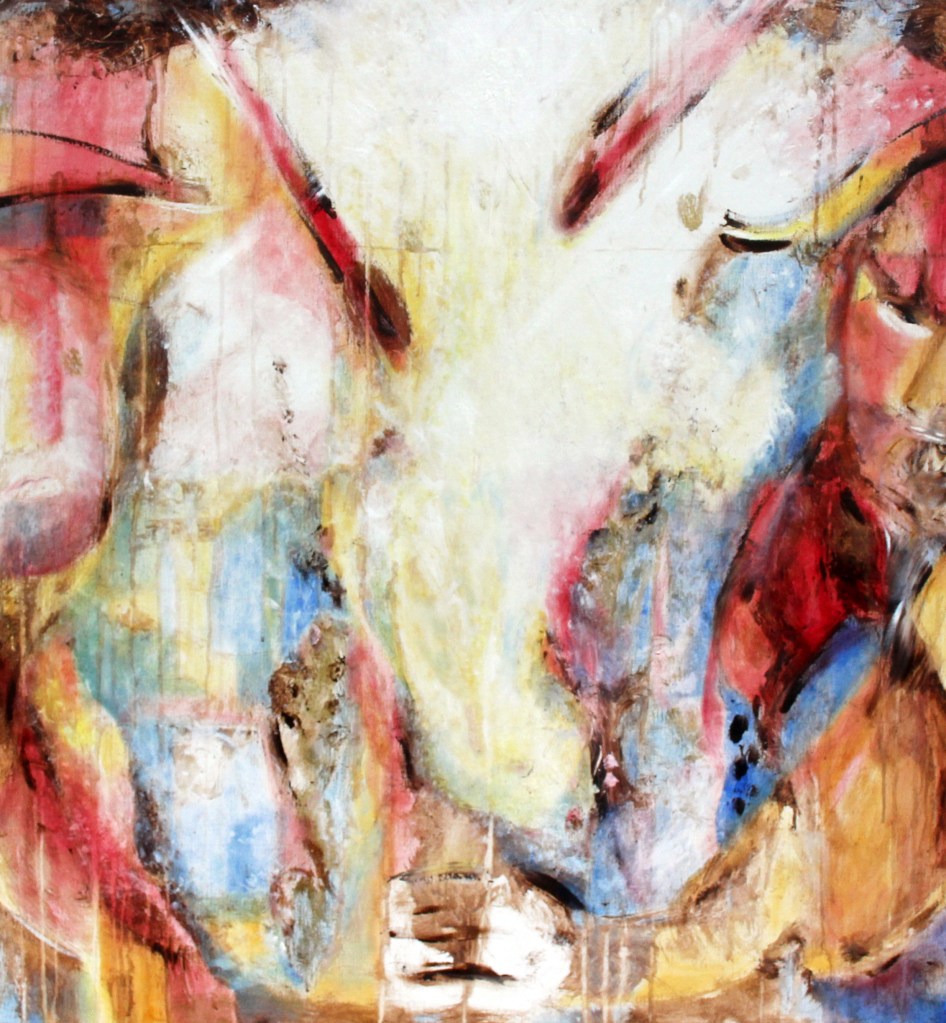
It is the desire to encounter oneself and others even in the face of an absolute opposite that is also expressed in the painting KRIEG UND FRIEDEN (WAR AND PEACE, 2022, oil and acrylic on canvas, 100 × 180 cm).
“The monumental double portrait KRIEG UND FRIEDEN (WAR AND PEACE) references the title of the eponymous novel by Leo Tolstoy. It features colours and techniques reminiscent of Marc Chagall’s work,” art historian Angelika Doppelbauer describes. “The two figures depicted, likely soldiers given their tricorn hats, are significantly battered. Torn clothing, partially disfigured and injured faces, and an oppressive, sometimes aggressively coloured palette convey a strong emotional impact. The paint streaking in many areas can be interpreted as tears, blood, or a situation in disarray. The composition separates the figures with a bright area that appears as a descending dove of peace. It is crossed only at the bottom of the image by the outstretched arms of the two adversaries. The work’s richness in detail and its representational execution are highly narrative. The seemingly reaching hands of the two lend the image a reconciliatory character.”